
Product introduction
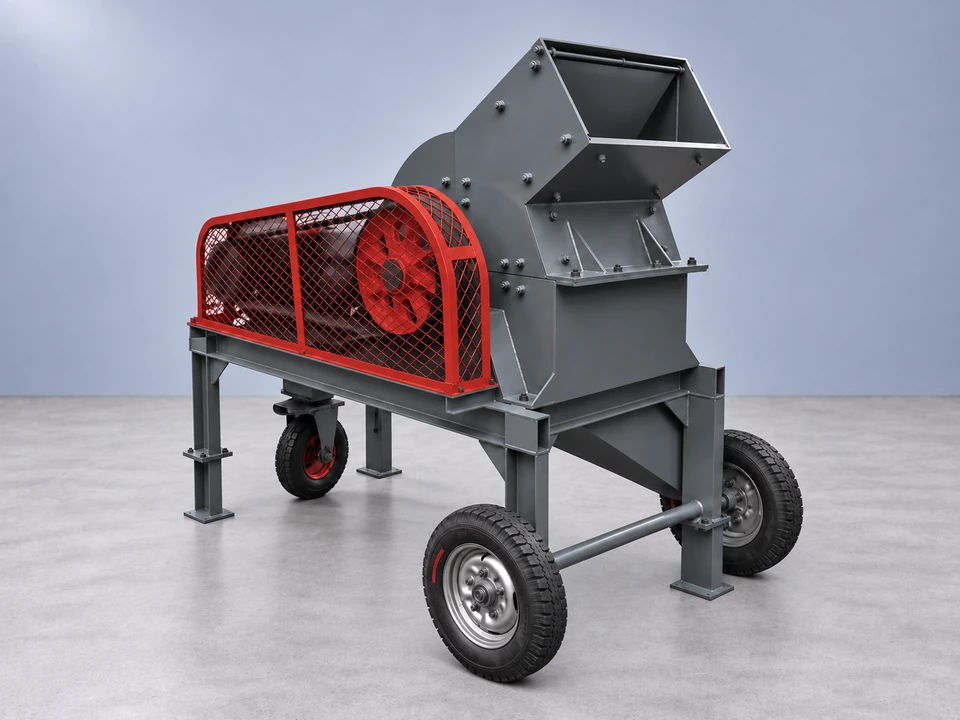
Hammer crushers use rotating hammers to impact brittle material. Compact arrangements may suit straightforward duties where feed condition and wear behavior are understood.
Simple Crushing for Brittle Materials
For selected brittle materials such as limestone and coal, compare Zhongji catalog PC models by maximum feed, required output and hourly duty. The catalog figures support an initial shortlist; actual material, moisture and wear conditions still determine whether hammer crushing is appropriate.
Model / technical reference
The catalog steps from PC400×300 to PC600×400 and PC800×600 as feed allowance, throughput and motor power increase. Check material suitability before choosing a size.
| PC model | Rotor Ø × length | Feed | Output | Capacity | Power | Dimensions L × W × H | Weight |
|---|---|---|---|---|---|---|---|
| PC400×300 | 400 × 300 mm | <80 mm | <10 mm | 5–8 t/h | 11 kW | 812 × 982 × 785 mm | 0.7 t |
| PC600×400 | 600 × 400 mm | <100 mm | <15 mm | 10–15 t/h | 30 kW | 1200 × 1114 × 1114 mm | 1.5 t |
| PC800×600 | 800 × 600 mm | <120 mm | <15 mm | 20–25 t/h | 55 kW | 2620 × 1864 × 1340 mm | 3.7 t |
Source and limit: Zhongji Hammer Crusher catalog, printed page 9. The catalog does not state a revision date. These are reference specifications, not a current quotation or guaranteed output. Confirm the current machine configuration and supply scope before ordering.
For an initial check, send the material, maximum feed, required product size, hourly capacity, moisture, abrasiveness, operating hours, site voltage and installation constraints. Wet, sticky or highly abrasive feed may require a different crushing route. For the full hammer crusher family, see the main Hammer Crusher page.
Hammer crushers use rotating hammers to impact brittle material. Compact arrangements may suit straightforward duties where feed condition and wear behavior are understood.
Limestone, coal and selected soft-to-medium-hard brittle materials. Wet sticky, very hard or highly abrasive materials need another selection review.
Material enters the crushing chamber and is impacted by rotating hammers, then reduced against internal surfaces before leaving through the discharge area.
Practical Advantages
A straightforward mechanical arrangement can support practical local maintenance.
Operating procedures remain manageable after guards, feeding and maintenance rules are confirmed.
Useful for selected limestone, coal and similar duties rather than every hard rock application.
Hammers and liners can be discussed with the confirmed model and material duty.
Current photos, documents and spare-part discussions can support qualified local dealers.
Typical discussions include hammers, liners, grate-related parts where applicable, bearings and belts. Exact parts require model confirmation.
Send material name and photos, feed size, output size, capacity, moisture condition, country and voltage.
Do not choose a hammer crusher only because its structure is simple. Hardness, abrasiveness and moisture can change the correct direction.
Real Factory Video
Real workshop footage with a practical explanation of suitable materials, towing requirements, wear considerations and the data needed before selection.
Read Guide & Watch Video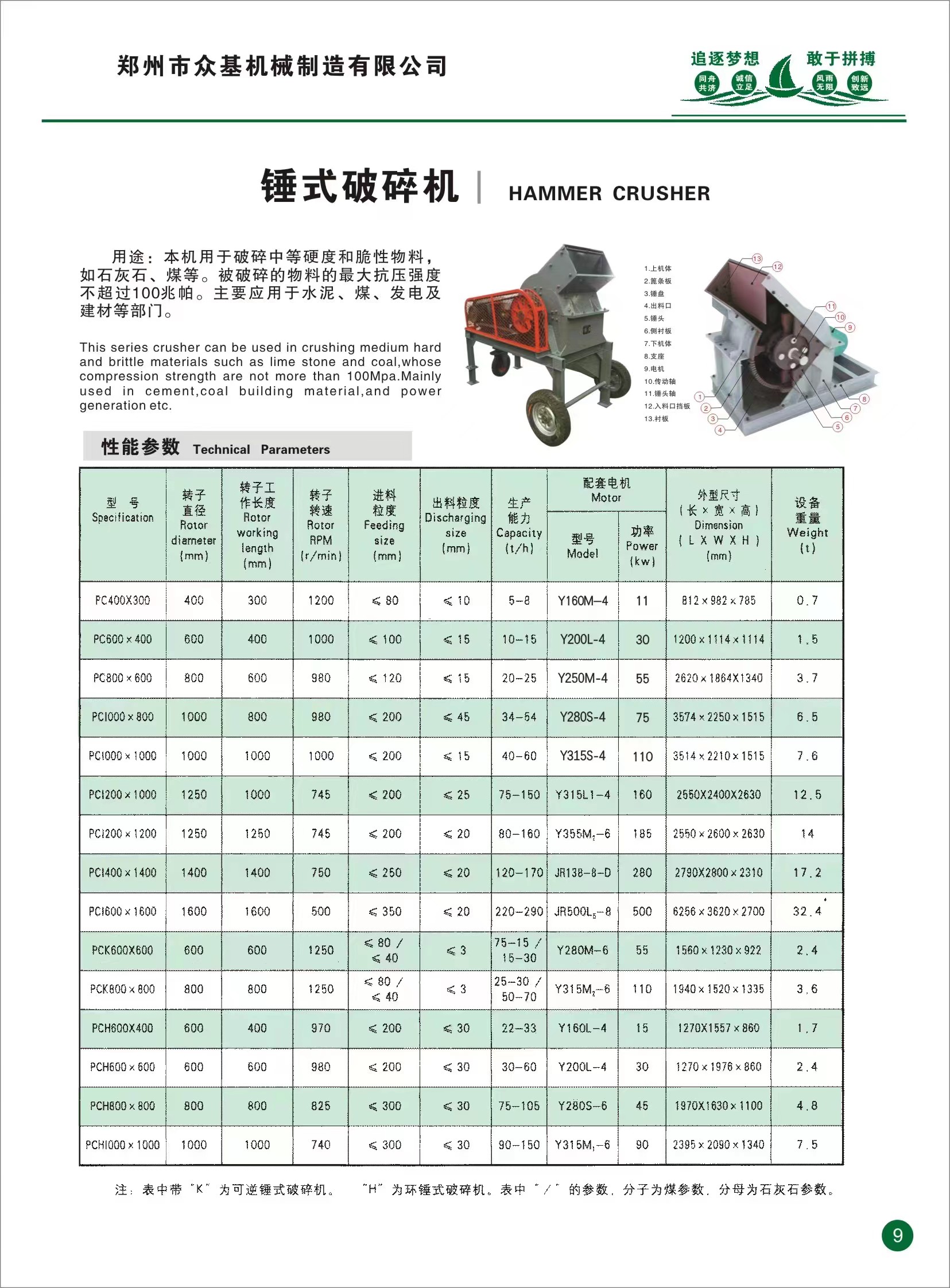
Catalog / model reference
Model and parameter reference for PC400×300, PC600×400 and PC800×600.
FAQ
Limestone, coal and selected soft-to-medium-hard brittle materials may be suitable after hardness, moisture and abrasiveness are reviewed.
No. Very hard, highly abrasive or wet sticky materials may require another crusher direction.
Yes, after the exact machine model and drawing version are confirmed.
Local target material, common customer capacity, voltage, requested product size and expected support scope.
Send material, maximum feed size, required product size, capacity, country and site voltage.