
Crushing
Feed size, material behavior and the next-stage size requirement frame the reduction duty. They do not by themselves identify a final machine model.
Quartz Sand Project Preparation
Define the feed, required size fractions and washing duty first. Keep purity, impurity removal and final quality conclusions tied to representative analysis and testing.
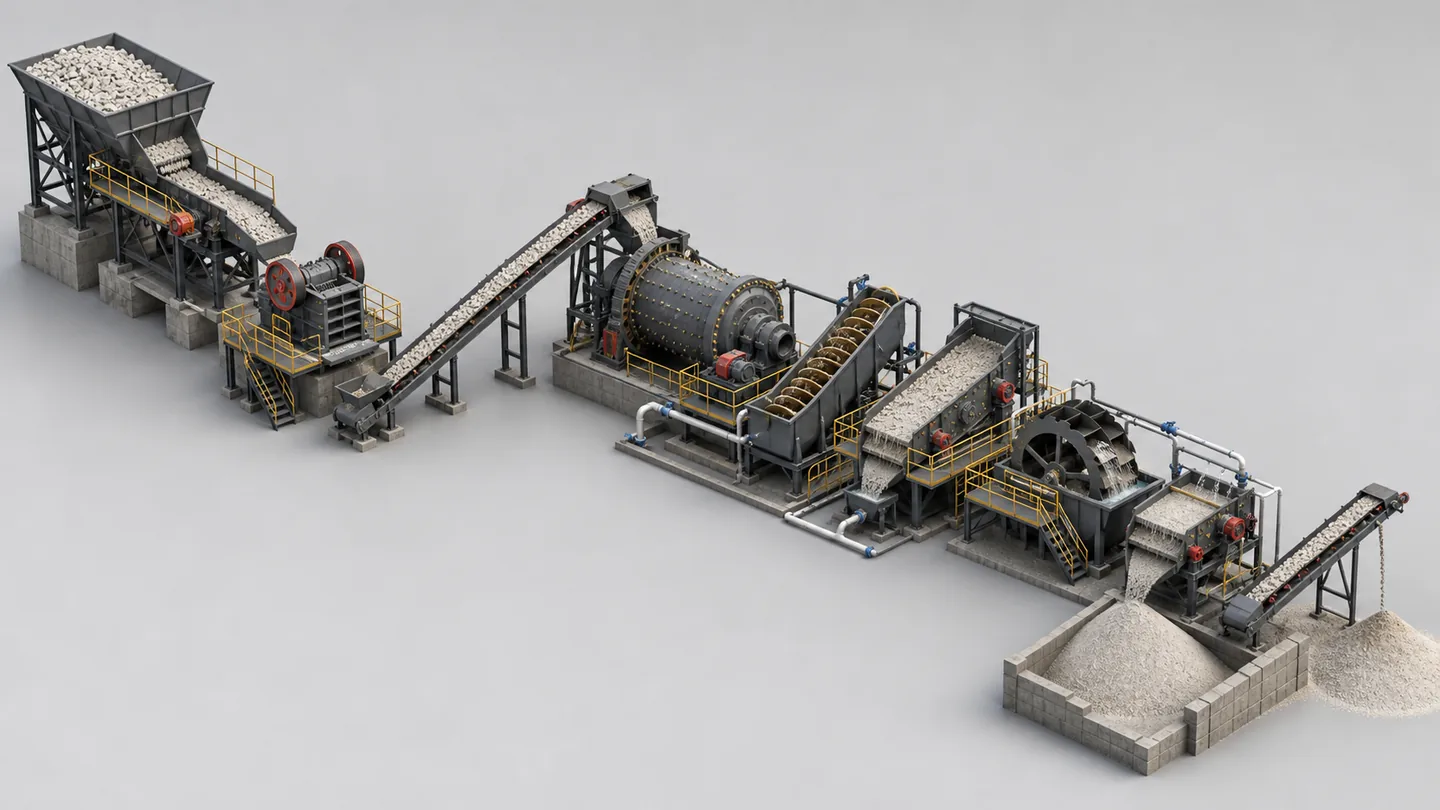
Quick Answer
A useful inquiry separates size-control and washing duties from conclusions that depend on representative material analysis and process testing.
Required Evidence
Record unknowns as unknown. A trade name such as “quartz sand” is not a substitute for a representative sample or measured size distribution.
Provide photographs, sample origin, sampling method and any available chemical, mineralogical or particle-size reports. State whether the material is rock, granules, tailings or previously processed feed.
State the maximum lump size, typical size distribution, moisture, visible clay or fines, and whether oversize or foreign material may enter the line.
List each required product range and the permitted oversize and undersize. Explain whether the target is a washed saleable fraction or feed for a later test-defined process.
Describe what washing should remove physically, the available water source, water-quality constraints, discharge or recycling plan, and required dewatering condition.
State required throughput, planned operating hours, batch or continuous operation, available power, site elevation if relevant, space and access limits.
Identify which quality targets have supporting analysis or tests. Do not convert a desired purity, iron level or color into a guaranteed result without representative test evidence.
Engineering Boundary
Feed size, material behavior and the next-stage size requirement frame the reduction duty. They do not by themselves identify a final machine model.
Grinding should only enter the discussion when the required preparation size and downstream purpose justify it.
Screening or classification must be discussed against stated cut sizes, acceptable misplaced material and wet or dry operating conditions.
Water, feed fines, physical contamination and discharge requirements define the duty. Washing alone is not evidence of a purity result.
Engineering limit: final purity, impurity removal, iron reduction, recovery, grade and product acceptance cannot be inferred from the material name or a conceptual flow. They require representative analysis, testing and agreed acceptance criteria.
Four Checks
The objective is a clear design basis, not a premature equipment list.
Compare the measured feed distribution with every required product fraction. This shows where reduction, classification and recirculation may need evaluation.
Distinguish removable surface clay or loose fines from mineral impurities. Review the real sand-washing equipment video as equipment evidence, not as proof of a result on your quartz.
If a finer preparation size is required, provide the test basis and duty before reviewing the ball mill knowledge hub. If it is not required, do not add grinding by assumption.
Define machines, motors, controls, water handling, structures, foundations, installation, commissioning, sampling points and responsibility for downstream test work.
Before Selection
No. It can frame crushing, optional grinding and classification duties, but feed variability, moisture, clay, water conditions and the purpose of the prepared fractions still affect the discussion.
No. Washing may address a defined physical cleaning duty, but purity and impurity-removal outcomes require representative analysis, testing and agreed acceptance criteria.