
Vibrating Screen Capacity: Why Plant TPH Is Not Screen TPH
Quick AnswerPlant TPH is not automatically the load reaching a vibrating screen. Return material can increase screen feed; bypasses can reduce it. The screen must handle that actual load while making the required size separation, not simply match the plant's advertised tonnage.
Start With What the TPH Number Measures
Plant throughput may describe fresh feed or finished product. Confirm which one, and whether the figure is an operating target or measured production.
Screen feed load is the total material reaching a particular screen, including any return stream entering it. Screen capacity is the throughput it can handle at the specified separation duty. A feed rate alone does not prove that the products meet their grading requirements.
Use the same mass and time basis when comparing figures. Dry solids, wet material and slurry including water are not interchangeable tonnage figures.
Count the Material That Comes Back
In a closed crushing circuit, material can pass through the same screen more than once. Include the return load at that screen's inlet instead of sizing it from fresh plant feed alone.
New material to this screenScreenIn-size product
Screen oversize → Crusher → Return to the same screen
Illustrative load only: 100 t/h of new material plus 40 t/h of returning material at the same screen inlet means 140 t/h of screen feed. This assumes steady flow on one dry-solids basis. It is not a Zhongji screen rating, an output guarantee or a recommended return ratio.
Screen feed is not always higher than plant TPH. Without returns or bypasses, the rates may match on the same basis. A split or bypass can send only part of the plant flow to a particular screen.
What Changes Usable Screening Capacity?
The same feed tonnage can be an easy or demanding screening duty. Check the required separation as well as the amount of material.
| Check | Why it matters |
|---|---|
| Cut size and grading | Aperture and the required product specification define the separation duty, not just the tonnage passing over the deck. |
| Feed size distribution | Maximum size and the proportions of coarse, fine and near-aperture particles change how readily material separates. |
| Moisture and clay | Sticky fines can coat particles or obstruct openings, reducing effective screening area. |
| Bulk density | The same mass flow can occupy a different volume and create a different material bed. |
| Deck and screen media | Available area, open area and media condition affect carrying and separation capability. |
| Feed distribution and peaks | Uneven feeding or surges can overload part of a deck even when the average plant rate looks acceptable. |
Do Not Add Deck Capacity Figures to Estimate Plant TPH
On a conventional stacked multi-deck screen, each lower deck receives material that passes the deck above. Its load and size distribution therefore differ from those of the top deck.
Check each separation. A finer lower-deck duty can be limiting even when the top deck carries the incoming feed. Do not add deck capacity figures together and call the result plant output.
Read a Capacity Reference With Its Conditions
Before treating a quoted TPH range as suitable, ask which material, feed grading, aperture, deck arrangement, moisture condition and separation requirement it describes. A larger crusher does not by itself establish that the existing screen can handle the new duty.
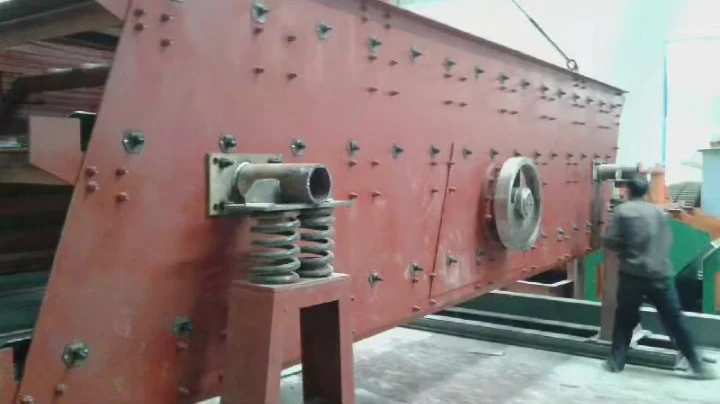
See the Zhongji Vibrating Screen product page for equipment references and selection inputs. Use the Sand & Aggregate Solution to discuss how crushing, screening and conveying connect. Final screen sizing requires review of the actual circuit and material.
Send the Screening Duty, Not Only Plant TPH
For an initial review, share:
- Material, maximum feed size and available size-distribution data.
- Plant throughput target and what it measures; screen feed and return load if known.
- Required product sizes, number of separations and grading requirements.
- Moisture, clay and bulk density if known; wet or dry screening.
- A simple circuit sketch showing feeding, bypasses, return paths and existing equipment.
Mark unknown information as unknown. Zhongji can review the screening duty with you before proposing equipment and a project-specific configuration. This guide does not establish a model selection or guaranteed output.
Technical References
Screen sizing depends on feed rate, particle-size distribution, required cut size, material density, moisture and actual operating conditions. Final sizing should be checked against the actual duty and the selected manufacturer’s sizing method.