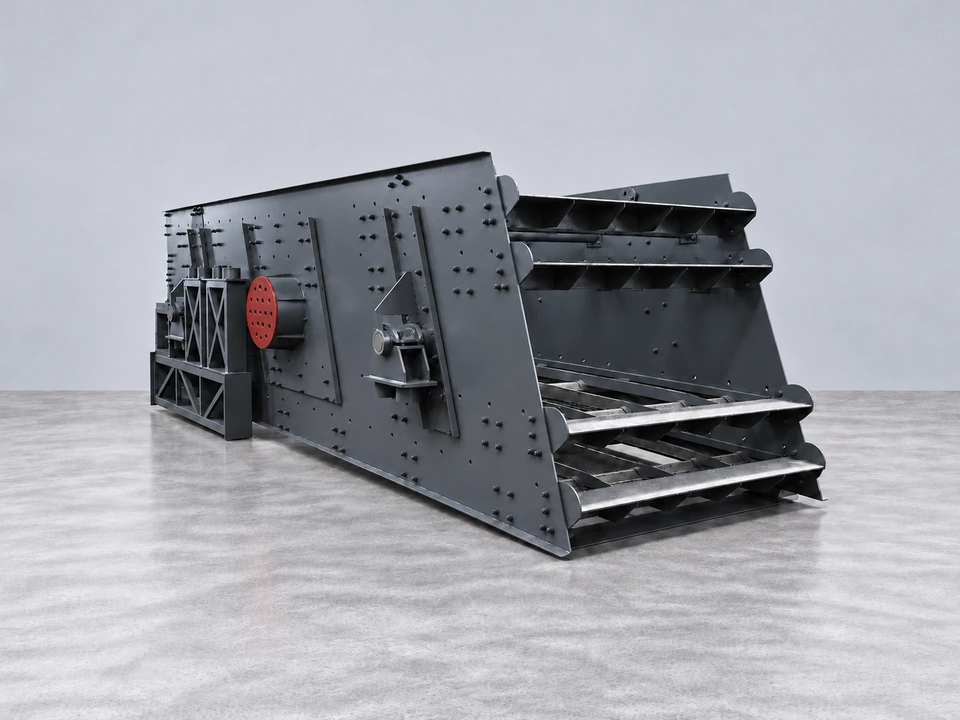
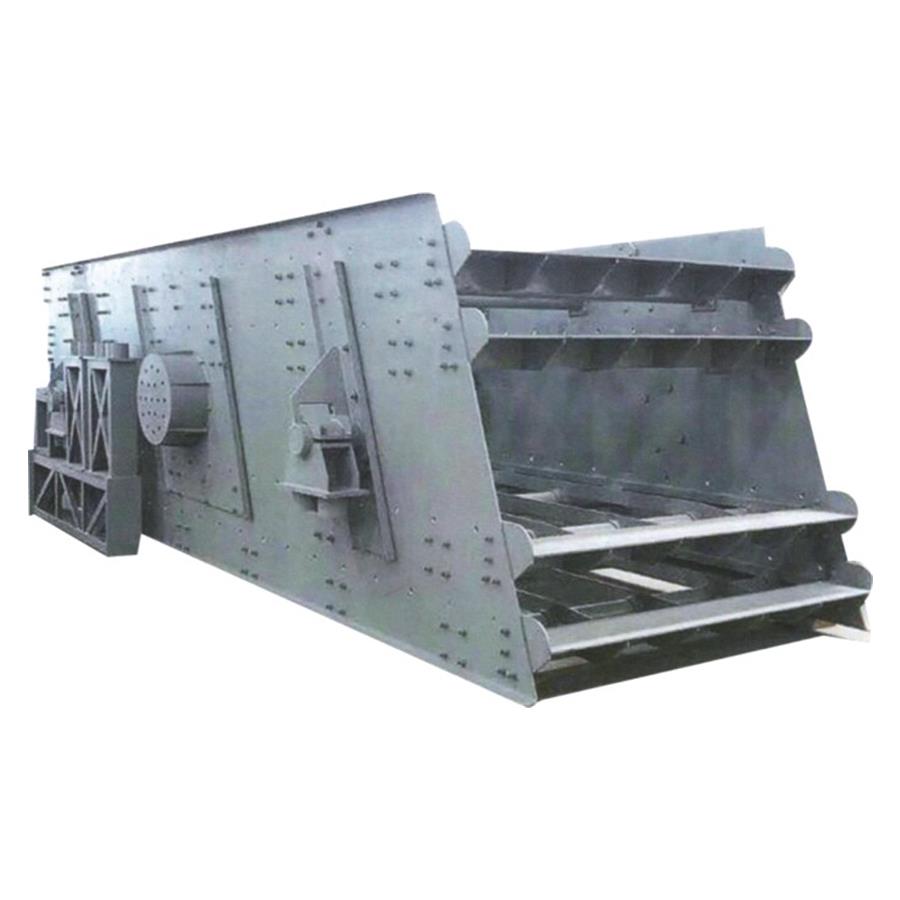
Product visualization based on Zhongji catalogue references. Configuration and supply colours are confirmed per project.
First-party catalog data
Compare representative YK and YA models
These selected rows come from Zhongji’s equipment catalog: PDF pages 22–23, printed pages 25–26. The catalog revision date is not stated. Current configuration and supply scope must be confirmed before quotation.
On a narrow screen, scroll each table sideways to compare all fields.
YK series — catalog reference specifications, PDF page 22
Model
Screen surface (mm)
Listed area (m²)
Decks
Opening (mm)
Max feed (mm)
Power (kW)
Weight without motor (t)
YK1236
1200 × 3600
4.3
1
1–100
200
5.5
3.21
2YK1236
1200 × 3600
4.3
2
1–100
200
5.5
3.63
2YK2160
2100 × 6000
12.6
2
5–100
400
30
9.24
YK capacity figures are withheld because the capacity unit in this catalog needs confirmation. We have not converted or relabelled it as t/h. Screen surface dimensions are not overall machine dimensions.
YA series — catalog reference specifications, PDF page 23
Model
Listed area (m²)
Opening (mm)
Max feed (mm)
Capacity reference (t/h)
Motor model
Power (kW)
Catalog weight (t)
YA1236
4.3
6–50
200
80–240
Y132S-4
5.5
4.91
YA2160
12.6
6–50
200
230–800
Y180M-4
18.5
9.93
YA capacity ranges are catalog references, not guaranteed throughput for your material or cut size. This table does not separately specify deck count or overall dimensions, and does not say whether the listed weight includes the motor. Do not use these weights as a like-for-like installed-weight comparison with YK.
Before layout or purchase: Request the current machine drawing, deck apertures, motor/electrical configuration and duty review for the quoted model. The catalog alone does not confirm these for a new order.
Zhongji catalog equipment image; exact model not identified. This is not evidence of a current customer installation.
Reading the comparison
Choose the separation duty, then the configuration
Decks and screen surface
YK1236 and 2YK1236 list the same 1200 × 3600 mm surface, but one and two decks respectively. An extra deck supports another separation stage; it does not double the listed screen area or establish twice the throughput. 2YK2160 provides a larger documented surface.
Feed and required cuts
Check maximum feed against the incoming material and choose apertures for the required product sizes. A listed opening range is not a promise that one setup delivers every cut at the upper capacity figure. The sand and aggregate solution places screening within the complete line.
Material condition matters
Moisture and sticky clay can obstruct openings; the amount of fine and near-size material changes the separation duty. Supply feed grading and wet/dry conditions so a catalog model can be checked against the actual task.
Plant TPH is not necessarily screen-feed TPH: bypass and returning oversize change what reaches the screen. The Vibrating Screen Capacity Guide explains loading and return flow; this product page compares documented equipment.
Approximate information is enough to begin. Mark anything unknown so the technical team can identify the next checks.
Material and conditionMaterial name, photos, moisture or clay, and whether screening is dry or wet.
Feed to this screenMaximum particle size, size distribution if available, target t/h at the screen and any recirculating load.
Products requiredEach finished size or cut point and the number of separations required.
Site and processExisting crushers, conveyors, layout limits and a simple flow sketch if available.
Equipment evidence
Workshop screening equipment footage
This existing Zhongji video shows screening equipment during workshop assembly, followed by separate screening and conveying views at a site.
Workshop and site footage. It does not verify the model, throughput or performance of a particular customer installation.
Next step
Check the screening duty before choosing a model
Send the information you have using the checklist above. Unknown values are welcome; the next step is to confirm the missing conditions before a quotation.