
Ball Mill and Hydrocyclone Closed Circuit: How Does It Work?
Quick Answer
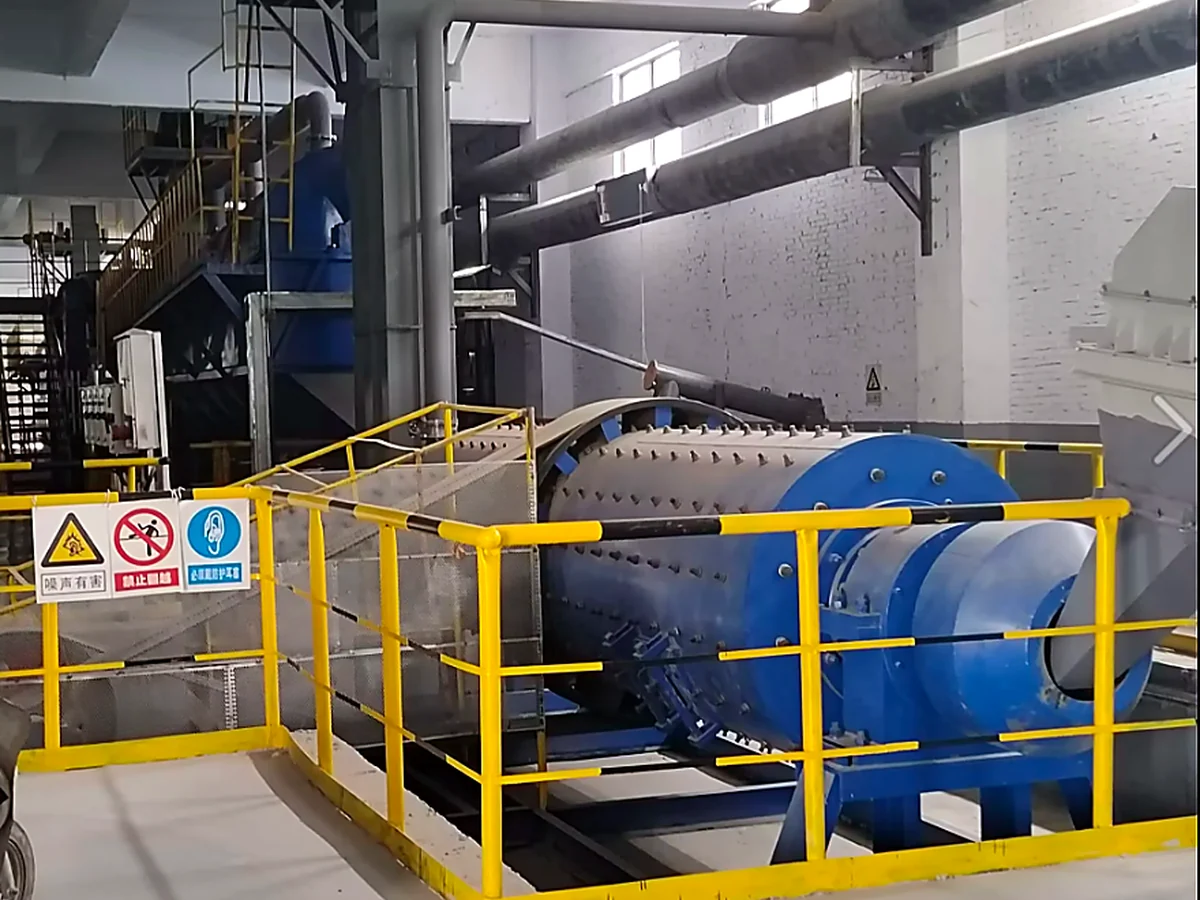
Ball mill discharge enters the hydrocyclone for classification. The stream tending finer generally leaves the grinding circuit through the overflow, while the stream tending coarser is commonly returned from the underflow to the mill for further grinding. This is not an absolute screen cut: particle density, feed pressure, slurry concentration and cyclone geometry also affect where particles report.
Closed-Circuit Flow
New feed enters the ball mill. In a typical wet closed grinding circuit, mill discharge is collected in a sump and pumped to the hydrocyclone at the required feed condition. Underflow commonly returns to the mill, while overflow generally advances to the next process. Exact sump and pump arrangements vary by plant.

What the Hydrocyclone Does
A hydrocyclone uses pressurized slurry flow to create centrifugal motion. Particles then have different tendencies to report to its two outlets according to size, density and the operating and geometric conditions.
- Overflow
- The inner, upward stream exits through the vortex finder and generally carries the finer, more dilute fraction to the next process.
- Underflow
- The outer, downward stream exits through the apex or spigot and generally carries the coarser, denser fraction back toward further grinding.
- Classification, not screening
- Particles near the separation point can report to either stream. Size alone does not determine the split.
Why Return Coarse Material?
Hydrocyclone underflow commonly returns to the ball mill so material that is not yet sufficiently ground receives another pass. This helps the downstream stage receive a more controlled feed and avoids treating fresh feed and already-fine material as though both need the same grinding time.
The actual return path and target product size must follow the confirmed flowsheet and ore testwork; no fixed efficiency improvement is implied.
What Affects Classification?
Hydrocyclone behavior changes with both the feed conditions and the selected cyclone geometry. These five factors should be reviewed together.
- Feed Pressure
- Pressure drives the internal flow pattern. Fluctuating or unsuitable pressure can change the split and make classification unstable.
- Slurry Solids Concentration
- Solids concentration changes slurry behavior, particle interaction and flow through the cyclone; a higher concentration is not automatically better.
- Cyclone Diameter
- Cyclone diameter is selected for the required duty and is one of the main geometric variables affecting capacity and separation behavior.
- Apex / Vortex Finder
- The underflow and overflow openings influence flow split, discharge condition and which particles tend to leave through each outlet.
- Ore / Particle Characteristics
- Feed size distribution, particle density, shape and slurry behavior can shift classification even when the equipment setting is unchanged.
Circulating Load Explained
Circulating load is the material kept inside the grinding loop by the classifier instead of leaving in the final overflow. In this simplified circuit, the ball mill handles both new feed and material returned in the hydrocyclone underflow.
When a project states a circulating-load percentage, its solids mass-balance basis and sampling condition should also be stated. This page does not assign an unverified design value.
When Classification Becomes Unstable
These observations are investigation prompts, not one-to-one fault diagnoses. Sampling and operating data are needed before changing equipment or settings.
Coarse particles in overflowReview feed pressure, solids concentration, feed size distribution, cyclone geometry and wear condition.
Excessive underflow returnCheck the feed solids load, size distribution, pressure and the current apex / vortex-finder arrangement.
Unstable cyclone feedCheck whether pump operation, sump level, water addition or upstream feed is fluctuating.
Inconsistent downstream feedCompare overflow rate and particle-size samples with upstream operating changes before drawing a conclusion.
Real Zhongji Engineering Reference
A supplied preliminary polymetallic-ore flowsheet for 41.8 t/h (1,000 t/d) and 10 mm feed shows a Φ3.0 × 4.0 m ball mill with an FX300×5 hydrocyclone group before downstream gravity and flotation branches.
This is a preliminary engineering reference, not an operating performance case. It does not prove throughput, classification efficiency, recovery or product size for another ore.
View 1000 TPD Polymetallic Ore Technical Reference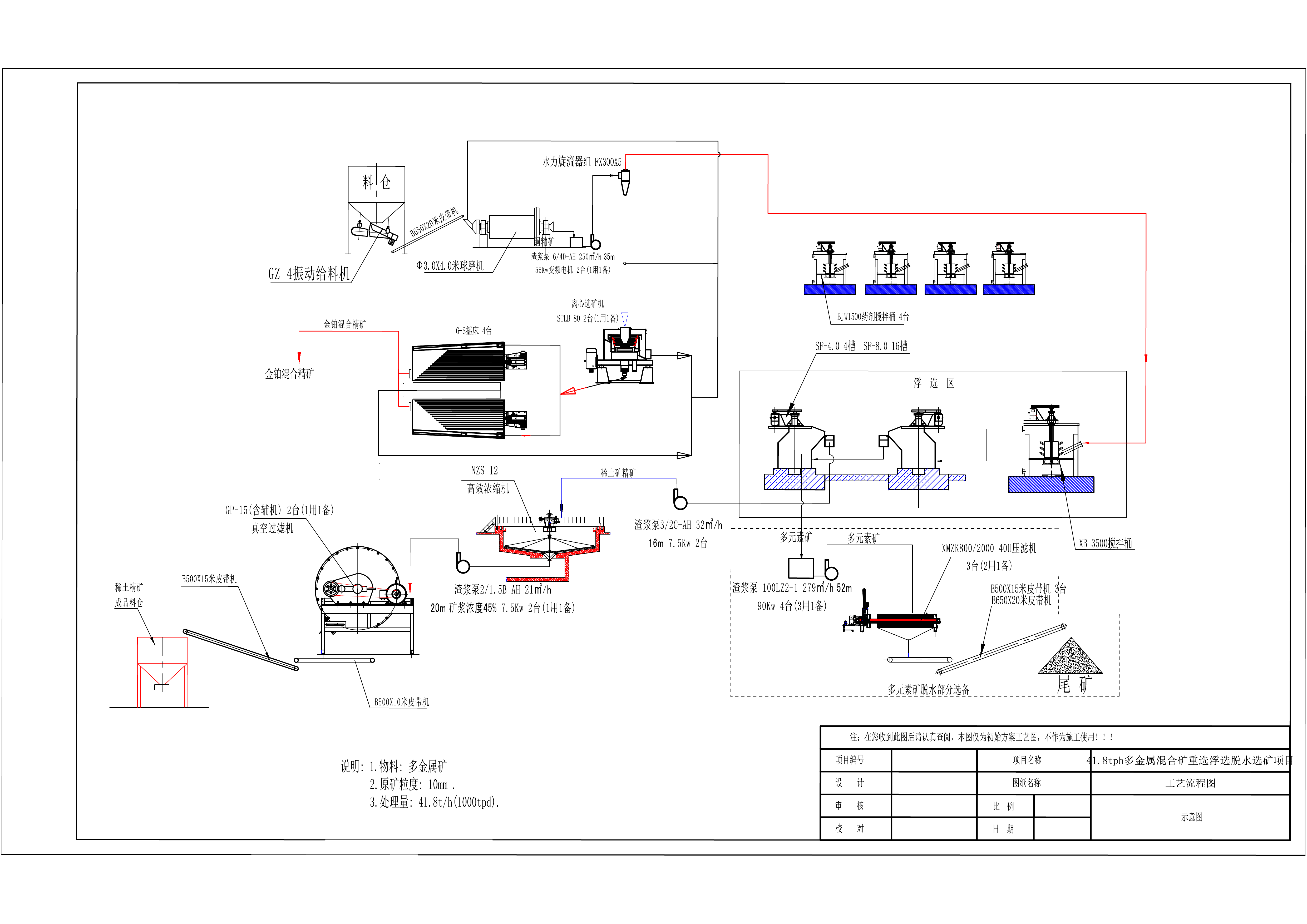
Taking this circuit into an equipment discussion
For a new purchase, start with the ball mill model and technical references. For an existing plant, identify the installed mill and explain what you are trying to change; the circuit diagram alone is not enough to select replacement equipment.
Share the material, known feed and target product sizes, and throughput when available. State whether that throughput means new feed or total mill solids load. An existing flowsheet or operating record can clarify the discussion, but you can begin with the information you already have.
Ball mill supply, classification equipment and any site services need an agreed scope; this guide is not a promise of a complete plant package.
Discuss a ball mill requirement
Review and send in WhatsApp, or use the other contact options.