
Jaw Crusher for Quarry: How to Choose Feed Opening, Capacity & Discharge Size
Quick AnswerA quarry jaw crusher should not be selected by tons per hour alone. Start with the largest lump size, then check required throughput, discharge size, material characteristics and the duty of the downstream crusher or screen.
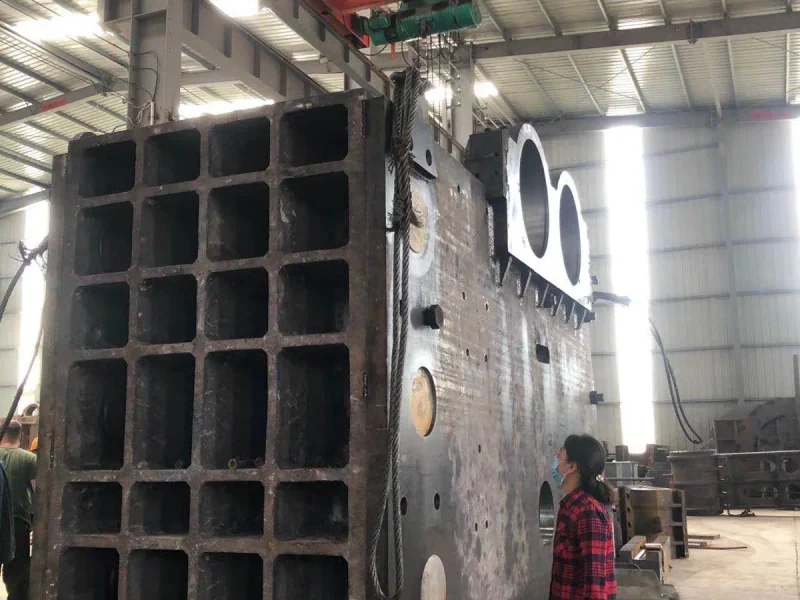
Start With the Largest Feed Size
Check the largest blasted lump, not just the average stone. Record the overall feed gradation too. The feed opening is the inlet geometry; it is not itself a guarantee that every lump of that size can enter. Use the model’s documented maximum feed limit, with allowance for actual lump shape and feeding conditions.
Oversize or slabby rock can bridge at the inlet and interrupt feeding. Review oversize handling before shortlisting a smaller jaw on TPH alone. Do not apply a generic feed-opening percentage as a Zhongji limit.
- Largest Feed Size
- Required TPH
- Required Jaw Discharge
- Rock / Feed Condition
- Secondary Crusher or Screen
- Model Shortlist
Match Capacity With Real Quarry Duty
A capacity range is a starting reference, not a fixed quarry output. Check feed gradation, material, discharge setting, feeding continuity and downstream restrictions together. Also clarify whether the target is feed through the jaw or saleable screened aggregate.
Can PEF600×900 handle 100 t/h? Its documented capacity reference is 56–192 t/h, so 100 t/h falls within that range—but does not prove suitability. Check the 480 mm maximum feed, material, discharge setting and actual line conditions before recommending it.
Jaw Crusher Capacity: What Determines Tons per Hour? →Decide the Required Discharge Size
Choose primary discharge for the next stage, not simply the smallest possible setting. Confirm the feed size distribution accepted by the secondary cone or impact crusher, screen, or stockpile / further-processing arrangement.
A tighter jaw discharge requirement can reduce throughput and change the number or duty of crushing stages. The discharge setting and the resulting product gradation are not interchangeable: confirm both rather than assuming all discharged stone has one size.
Check the Rock and Feed Condition
The rock name is only a first clue. Granite and basalt often require attention to hardness and abrasiveness; limestone can present a different duty from highly abrasive hard rock. Confirm the actual material rather than treating either crusher type as universally best.
- Check moisture, clay and fines that can interfere with feeding or screening.
- Identify slabby lumps, oversize and possible foreign metal before fixing the feed arrangement.
Plan feeding, not just truck discharge: hopper → feeder → optional scalping / fines removal → jaw crusher. Controlled feeding matters; pre-scalping may bypass suitable fines and change the crusher and downstream load, depending on feed condition. It is not mandatory for every quarry.
Check the Downstream Crushing Stage
A primary jaw must fit the secondary crusher, screen and conveyors. A larger jaw does not remove a downstream bottleneck.
- Jaw → Cone → Screen: a direction to assess for hard, abrasive rock and the required aggregate duty.
- Jaw → Impact → Screen: a direction to compare for suitable, less-abrasive material requiring further reduction and shape control.
Neither route is a fixed recommendation. Match material, final aggregate sizes, shape requirements, capacity and abrasiveness. For the limestone-specific choice, see Jaw Crusher vs Impact Crusher for Limestone.
Zhongji Quarry Jaw Crusher Model References
Use the maximum-feed column to screen candidates, then check discharge and capacity together. These values are model reference ranges from Zhongji technical documentation, not a quarry production guarantee.
| Model | Maximum Feed | Discharge Range | Capacity Reference | Motor |
|---|---|---|---|---|
| PEF250×400 | 210 mm | 20–80 mm | 4–14 t/h | 15 kW |
| PEF400×600 | 350 mm | 40–110 mm | 10–40 t/h | 30 kW |
| PEF500×750 | 425 mm | 50–120 mm | 30–90 t/h | 55 kW |
| PEF600×900 | 480 mm | 75–200 mm | 56–192 t/h | 75 kW |
| PEF750×1060 | 630 mm | 80–210 mm | 72–300 t/h | 110 kW |
Do not select the upper capacity value independently of feed, material, discharge setting, feeding continuity or downstream restriction.
Simple Quarry Selection Examples
Illustrative logic only, not a final model recommendation or a customer case.
- Large blasted hard rock + high throughput
- First check a larger documented feed opening and maximum-feed limit, then the downstream cone duty and screen load.
- Smaller quarry feed + moderate throughput
- A smaller jaw may be sufficient if feed, discharge and required throughput are compatible with its documented ranges and actual operating conditions.
What Information Is Needed Before Final Selection?
Provide the material, maximum feed size, required throughput, required jaw discharge size, and downstream crusher / screen. Add site or feeding conditions where relevant. These establish a shortlist; they do not replace final engineering confirmation.