
Material
Name the rock and share a clear representative photo.
Engineering Inquiry Checklist
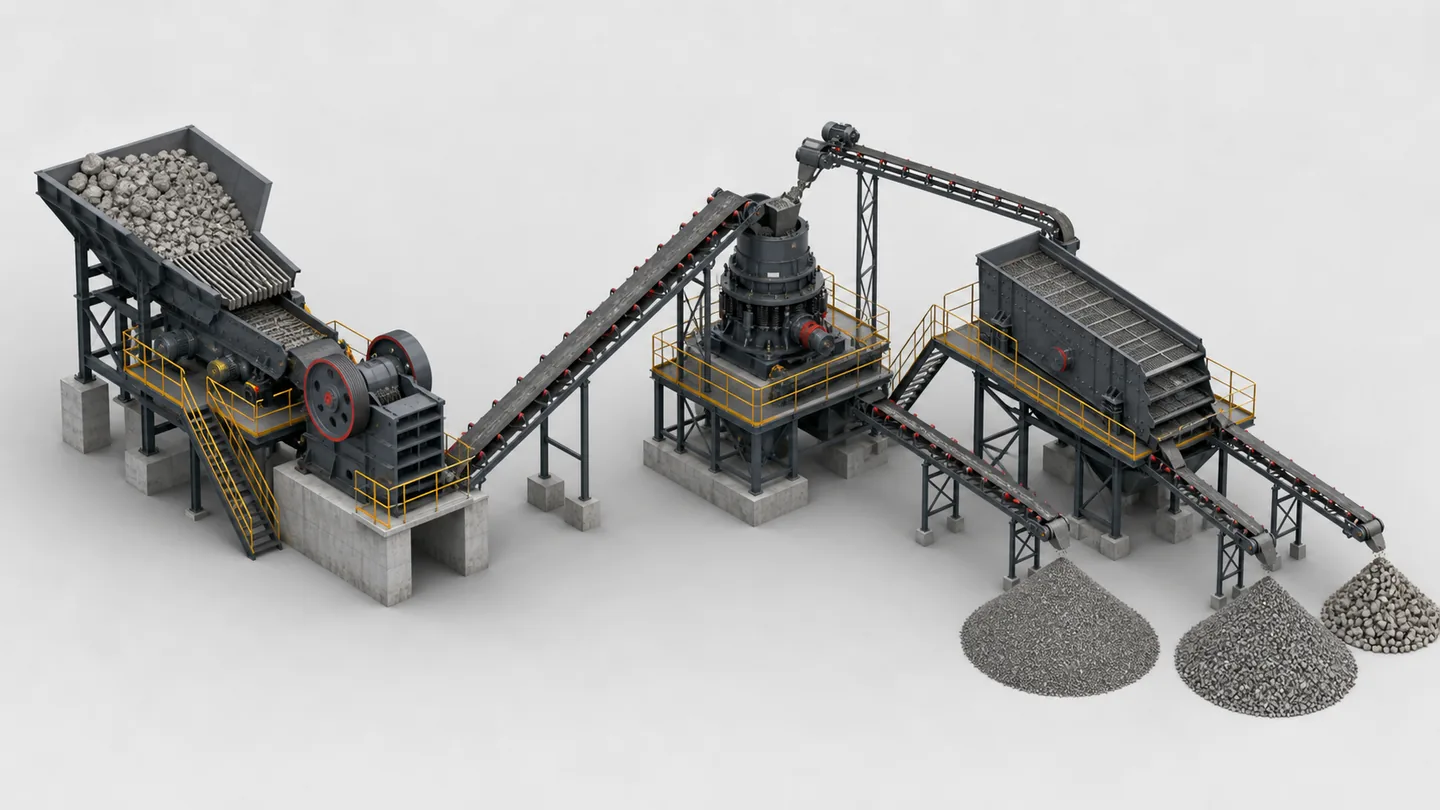
Start with the material, feed size, required products and capacity. These four facts define the first production-line direction.
Quick Answer
Name the rock and share a clear representative photo.
State the largest expected stone size.
List the required aggregate or sand sizes.
State the required tonnes per hour.
The Minimum Technical Brief
Unknown items can be marked for confirmation. Assumptions should never be presented as measured project data.
Name the rock or feed source. Add representative photographs and any available material analysis. State whether clay, fines or visible contamination is present.
Give the maximum lump size and, when known, the typical feed grading. Explain how material will reach the feeder.
List every finished size separately, the intended use and any applicable local grading or shape requirement.
State the required throughput as a project target, planned hours per day and whether feed is continuous or intermittent.
Provide an available-area drawing, terrain information, access limits, stockpile needs and maintenance clearances.
Confirm voltage, frequency, available power, water availability and site requirements for dust, noise or drainage.
Decision Gates
Feed size, material behavior and required products determine whether one or more size-reduction stages need evaluation.
The number of saleable sizes and their grading requirements shape the screening and return-circuit discussion.
Clay, silt, powder limits, water availability and wastewater handling must be understood before washing is proposed.
Terrain, roads, utilities, stockpiles and maintenance access constrain conveyor routes and equipment positions.
Engineering limit: material name and target throughput alone are not enough to confirm machine models, a final layout or expected results.
Before Requesting a Quote
Separate measured facts, required targets and still-unknown items. This reduces avoidable revisions when the process direction and commercial boundary are reviewed.
Include material photographs, site photographs, available analysis and a marked-up site plan. Identify the source and date of each item.
List finished sizes and applicable standards without assuming a crusher or screen model.
Ask what is included for equipment, conveyors, controls and structures, and what remains local work such as foundations, utilities, installation and permits.
A responsible first response should identify information gaps before a configuration is treated as final.
Material and photos: ___ · Maximum feed size: ___ mm · Required final sizes: ___ · Target capacity: ___ t/h · Working hours: ___ h/day · Country and site: ___ · Voltage and frequency: ___ · Stationary or mobile preference: ___ · Information still unknown: ___
Related Pages